
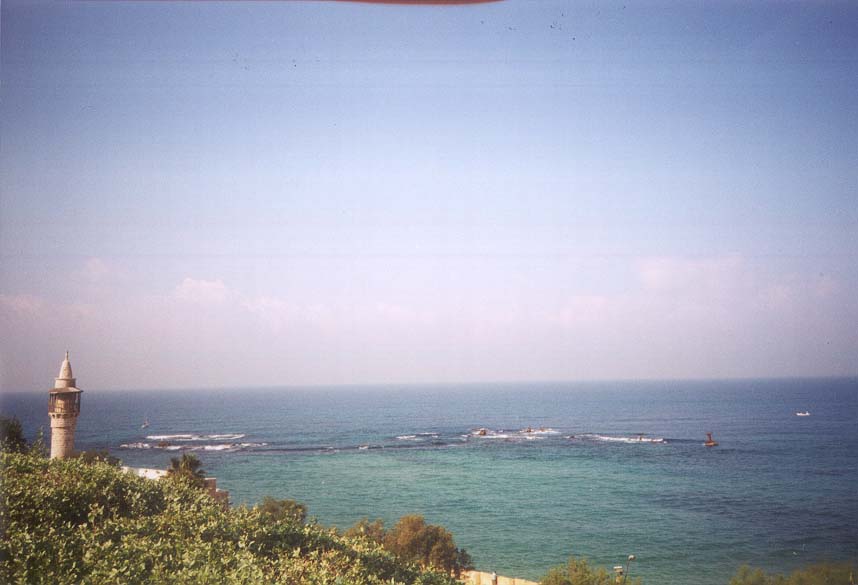
The first place we went when we arrived in Israel was Tel-Aviv. I had never seen the Mediterranean Sea before, and it was beautiful. Here was also my first encounter with palm trees.
In January of 2001 I went on a Birthright Israel trip with fellow Cornell students for 10-days to Israel. The trip started in Tel-Aviv, went South to Masada and the Dead Sea, ventured on to Jerusalem for a few days, and then finished up in the North of the country.
Click an image to enlarge it
|
|
The first place we went when we arrived in Israel was Tel-Aviv. I had never seen the Mediterranean Sea before, and it was beautiful. Here was also my first encounter with palm trees. |
|
Another view of the Mediterranean Sea from near Tel-Aviv. |
|
|
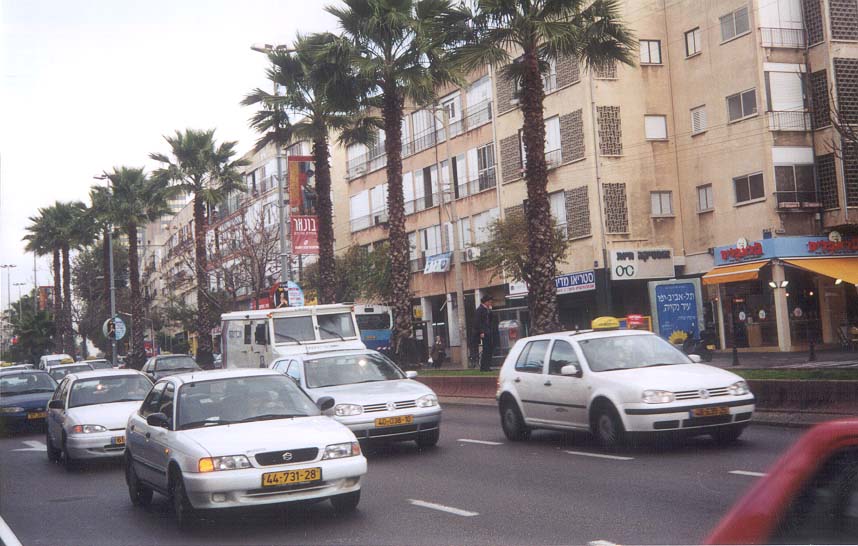
Compared to other cities in Israel we saw, Tel-Aviv was not so much different than some American cities I have been to. It reminded me somewhat of a smaller New York with palm trees. The city is actually less than one hundred years old and was built up from the sands long before the mass exodus from Europe. It is where Independence Hall is located. Unlike Jerusalem its possession is not contested by other religious or national groups. |
|
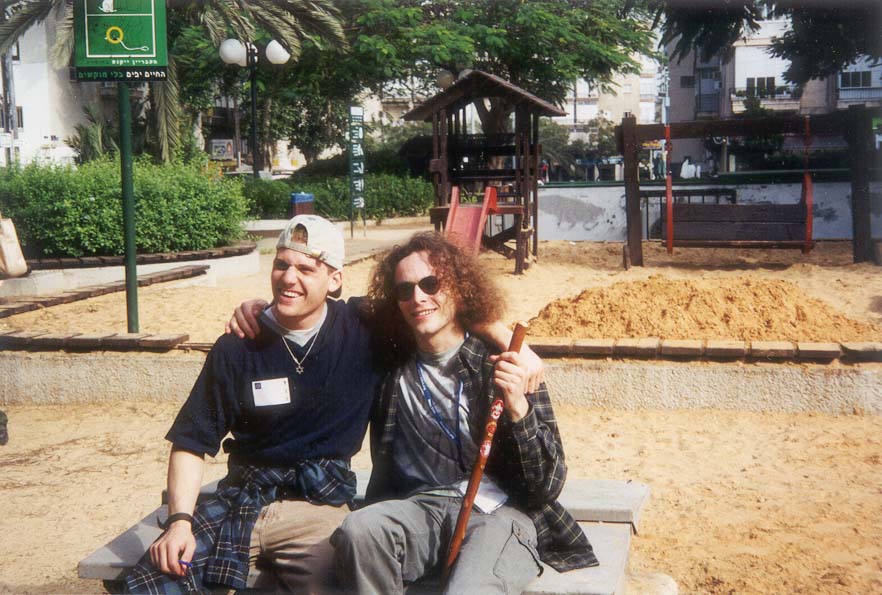
Dave from UNLV and myself in a park in Tel-Aviv. No, I no longer have hair like this. |
|
|
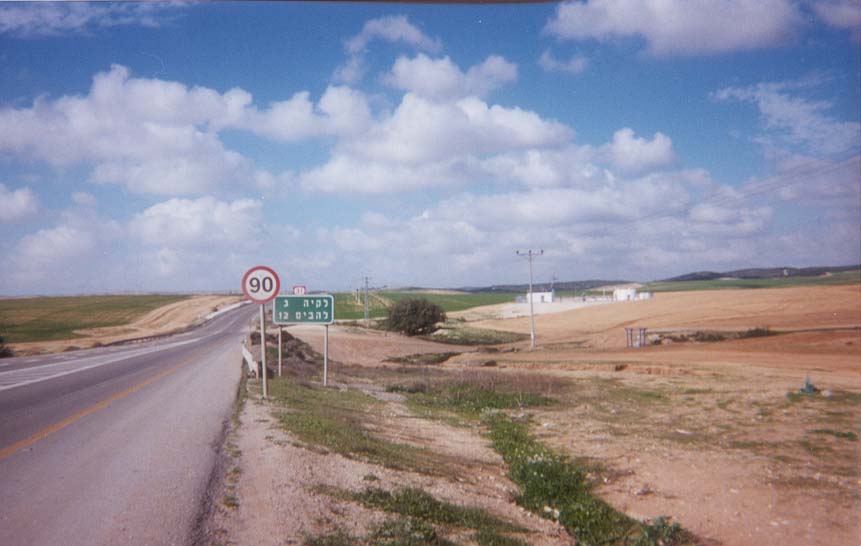
A road somewhere not too far from Tel-Aviv. Though in Israel nothing is very far from anything else. |
|
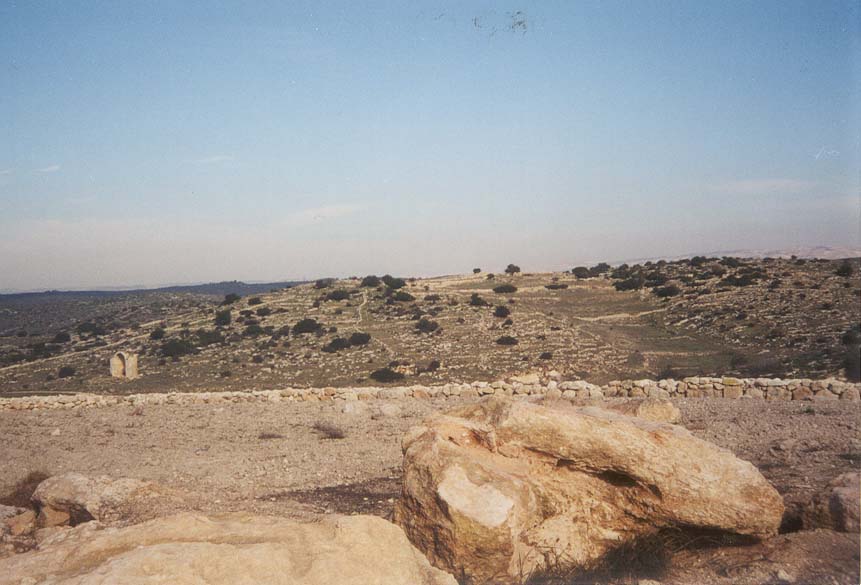
We visited Beit Guvrin National Park while staying in Tel-Aviv. It consists of the remains of multi-thousand year old mud houses made by a people other than the Jews when they still controlled Israel. Some of them are still somewhat intact and are connected by underground tunnels. We actually got to travel through underground, but unfortunately my camera ran out of film. It was pretty neat though, like being in caves. We got to dig for artifacts in the bottom of one of them and there were many old pieces of pottery to be found. |
|
|
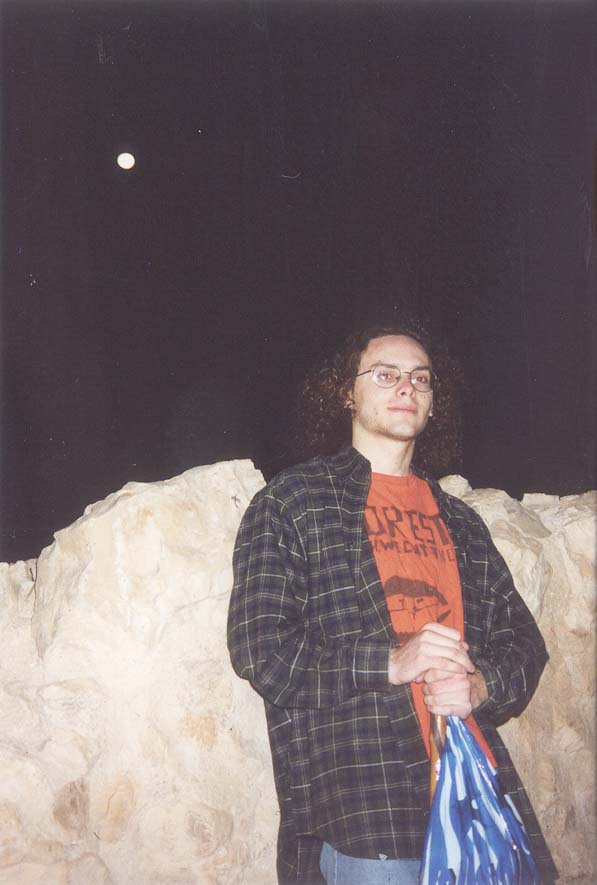
Next we headed to Masada. The story of Masada is moving and well remembered. It was where many Jews held out against the Roman army soon after the fall of the Temple; all died by their own hands. We took a early morning bus ride to the base of the mountain and climbed the Roman Ramp to get to the top just before sunrise. It was a beautiful night, and it was made all the more special by climbing that mountain, and in full moon light too! |
|
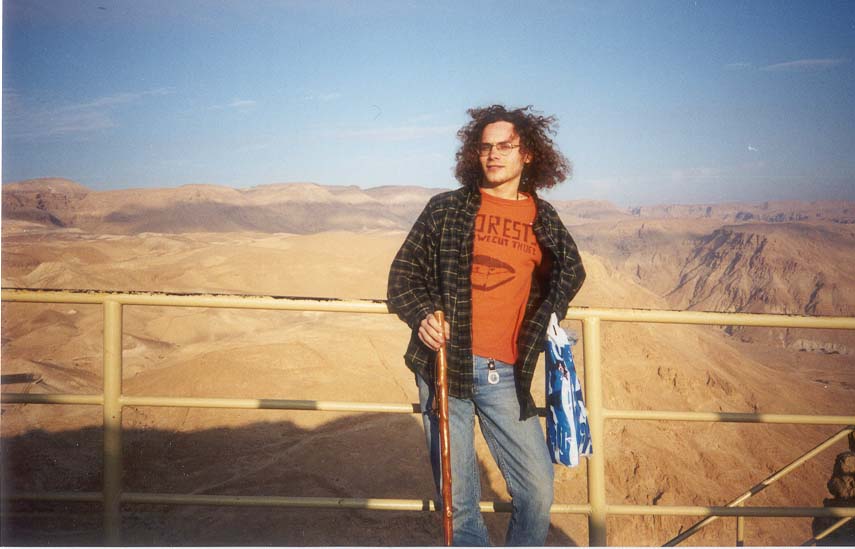
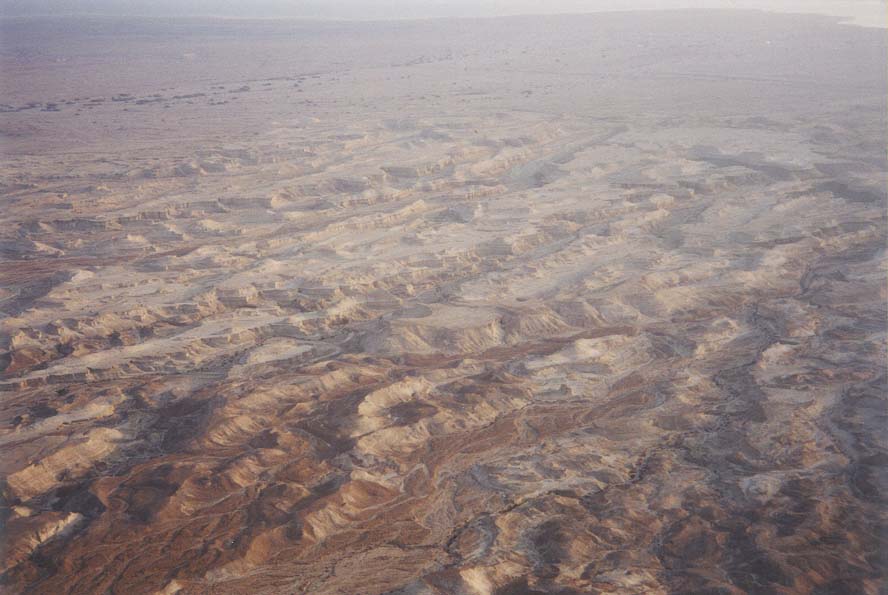
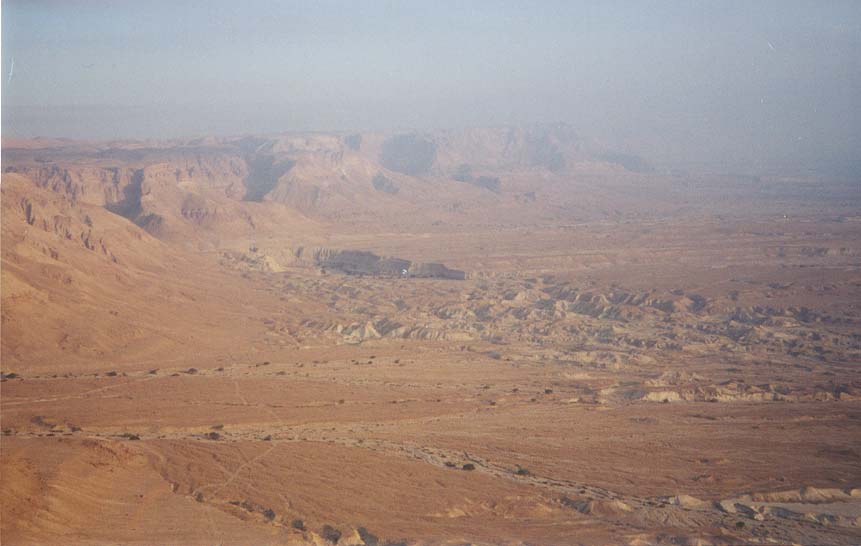
Once the sun rose over Jordan we had some spectacular views; I, being from the East Coast, had never seen anything like it before. Suffice to say that these photographs do not do them justice. |
|
|
Another spectacular view from the top of Masada. |
|
And another... looks like an old Western to me. |
|
|
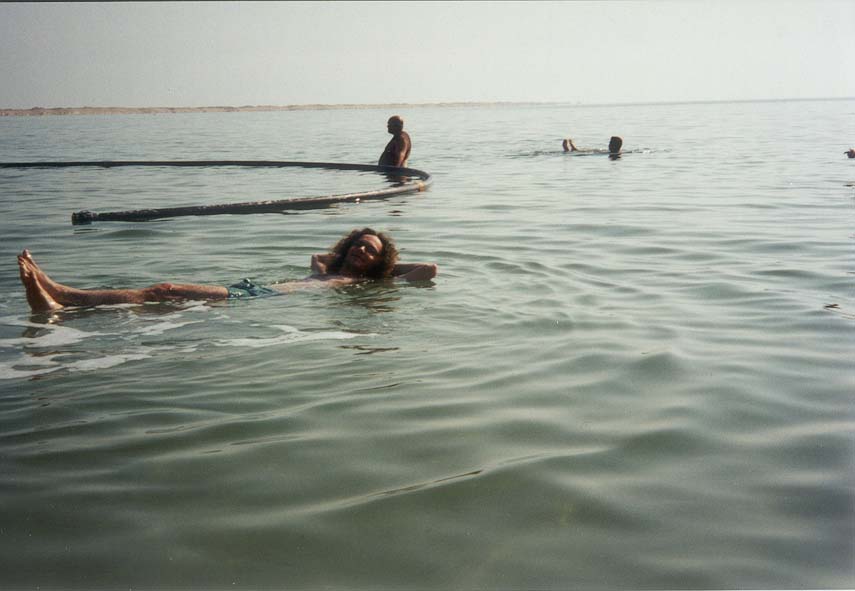
That's me floating in the Dead Sea, and yes, I'm lying quite at ease. We came here shortly after Masada, since they are near each other. It was somewhat refreshing to take a bath, but watch out - don't drink the water or open your eyes while submersed. I did and I had to go rushing to the fresh water shower to wash them out because they burned so badly. Its no wonder they call it the Dead Sea. Of course they didn't know about halophilic bacteria back then either. |
|
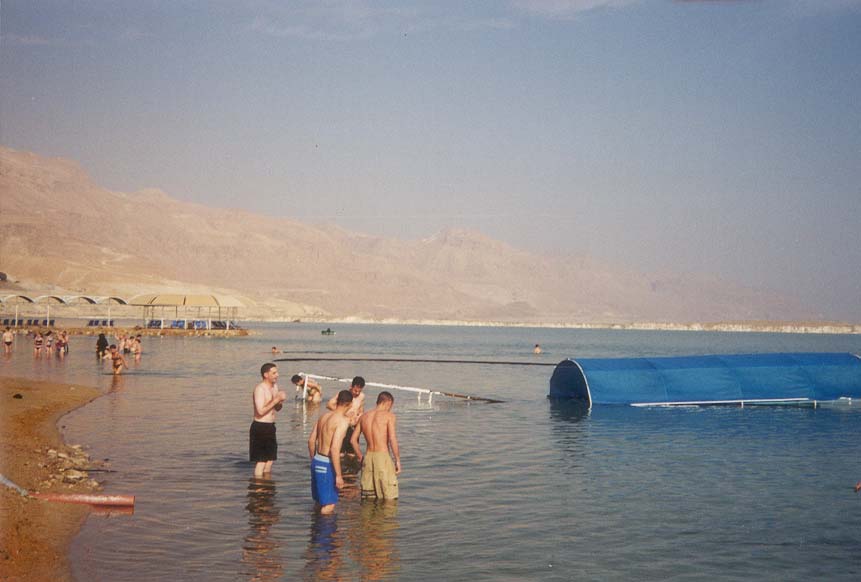
A bigger view of the Dead Sea and its surroundings. |
|
|
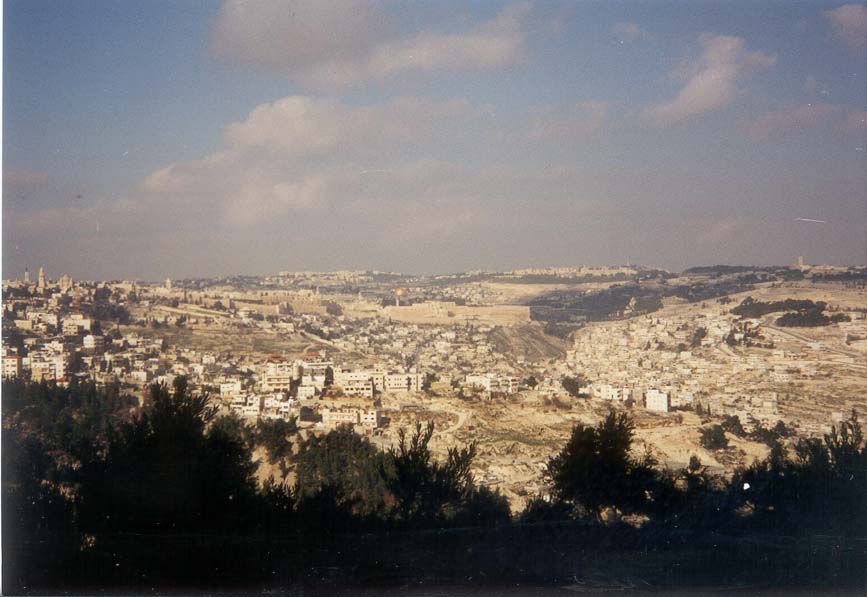
The Golden City, Jerusalem. We arrived here about a third of the way through the 10-day trip. I must say it was one of the greatest experiences of my life, especially being in the Old City. If you look closely at the middle of the photo you can see the Temple, and the Dome of the Rock. Click for an enlarged photo. |
|
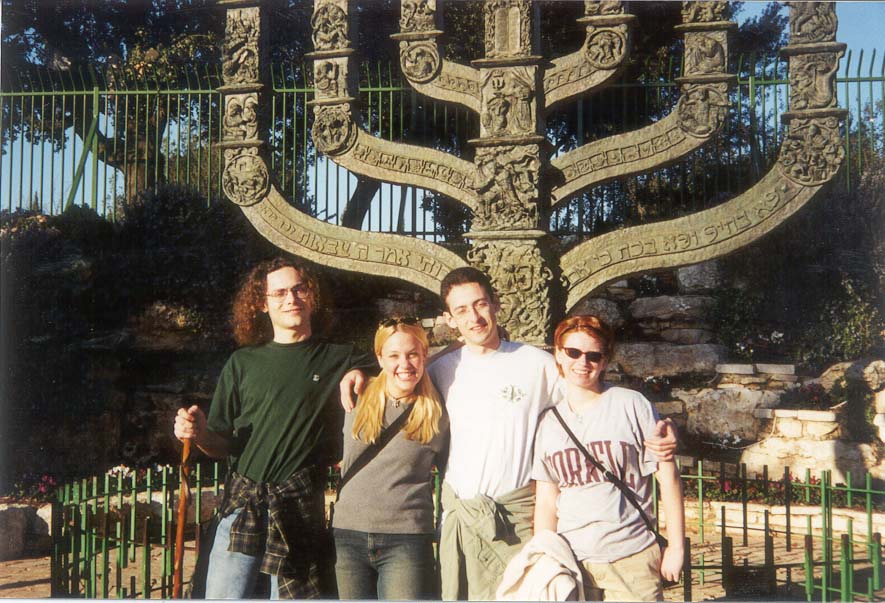
The Risleyites (past and present) making the trip decided we should pose for a photo together, and we just happened to do so in front of this intricately carved, large menorah in Jerusalem. We are facing the K'nesset, the Israeli Parliament. The Risley Residential College for the Creative and Preforming Arts was where I lived my first two years at Cornell. It was some place. |
|
|
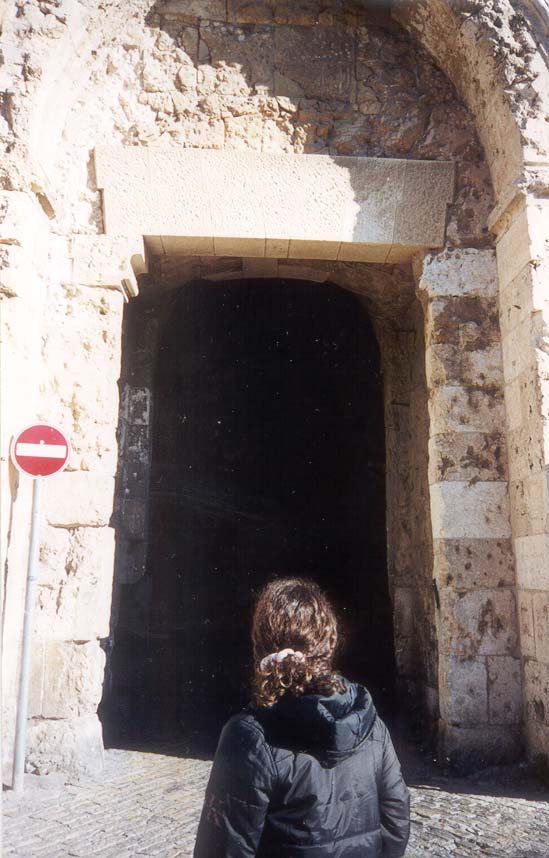
the Zion Gate to the Old City of Jerusalem. You can still see the bullet holes from the war of 1967, when Jordan still occupied the Eastern part of the City. |
|
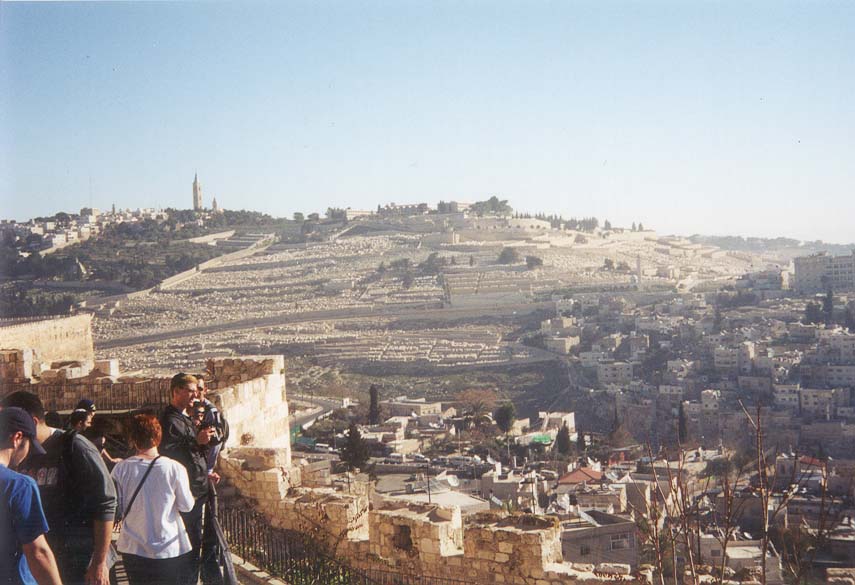
Mt. Zion from the South Wall of the Temple. The mountain is covered with Jewish cemetaries because it is believed that when the messiah comes to rebuild the Third Temple (this belief is certainly not held by everyone) that he will come into Jerusalem from that direction. |
|
|
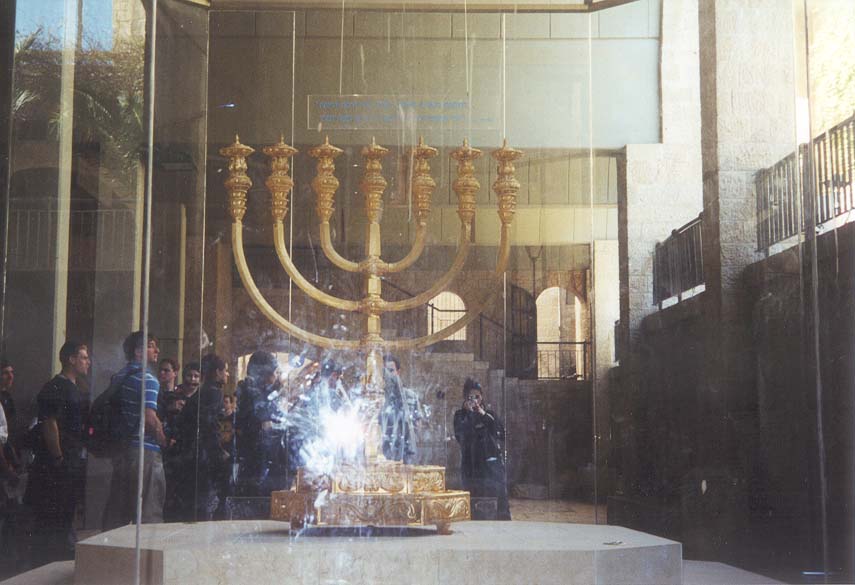
The menorah for the Third Temple. I don't remember how much gold was in this menorah, but I know it is alot. Like the people who had themselves buried on Mt. Zion, this menorah was built for the coming of the messiah and the rebuilding of the Third Temple. It is on display in the Jewish Quarter of the Old City, not very far from the Temple Mount. |
|
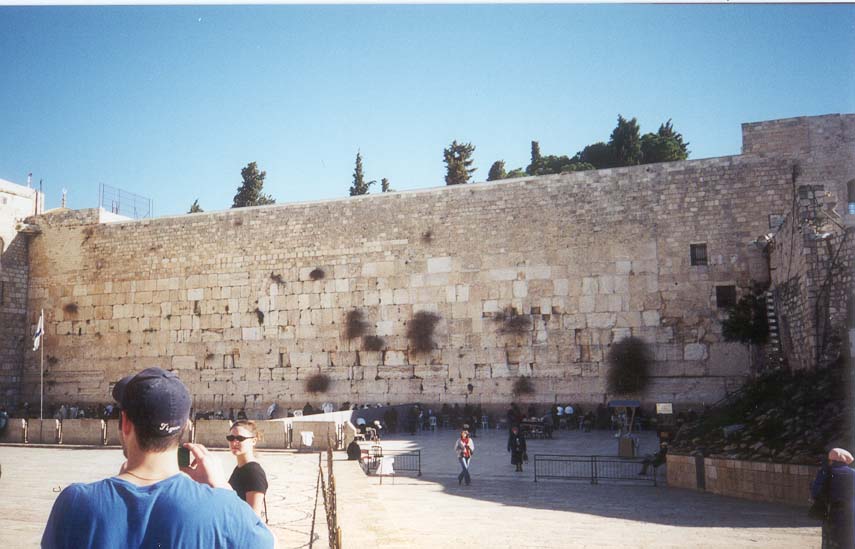
The Wailing Wall. The most sacred Jewish religious site in the world. The Western Wall is the only remaining wall from the Second Temple that was destroyed by the Romans in 70 AD, and so is over 2000 years old. It is considered an open Orthodox synagogue - men and women are separated with the earlier on the left and the latter on the right. From the men's side there is another section underneath other buildings to the left. Before it was destoyed by the Romans the Temple was the center of Jewish religious life; on the same site as the original Temple built by King Solomon. Ever since the exile, Jews in every part of the world have dreamed of seeing it again one day. |
|
|
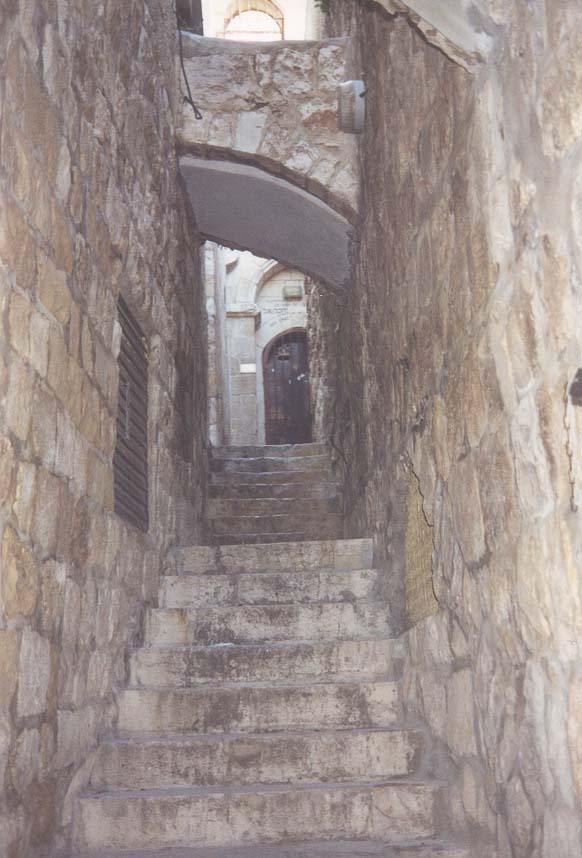
In the Old City of Jerusalem; this may have been in the Armenian Quarter. |
|
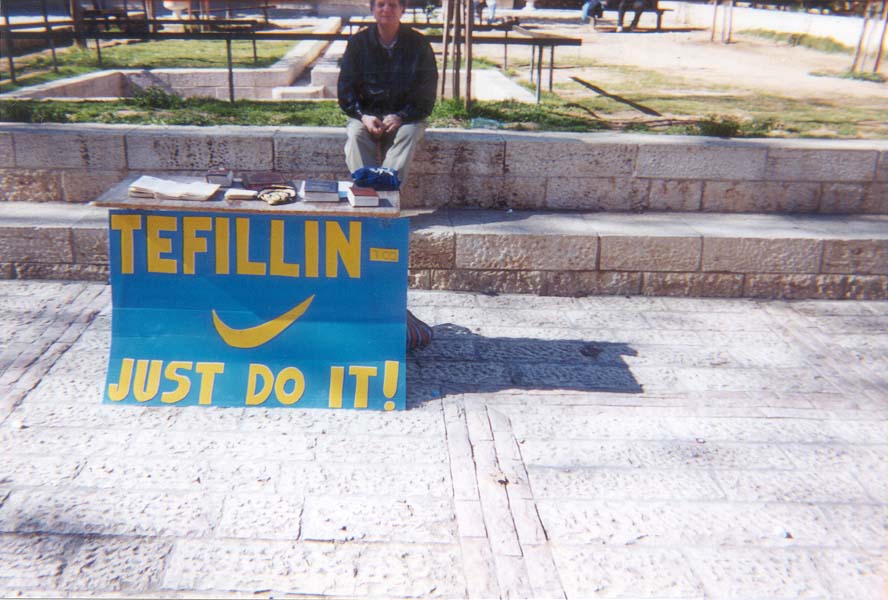
In the Jewish Quarter. The practice of wearing Tefillin is part of the 613 commandments the Orthodoxy follow daily (and you thought 10 were hard to follow). |
|
|
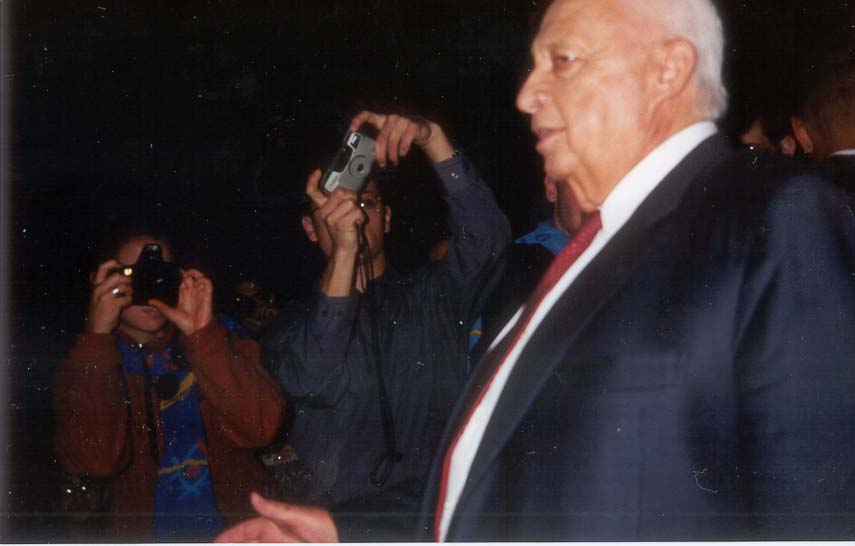
Ariel Sharon a few weeks before he was elected Prime Minister of Israel. We actually got to hear him speak to us in a big Birthright bonanza in Jerusalem while we were there. At the time the new Palestinian uprisings were just a few months old, and in fact many people who had previously decided to go on the trip changed their minds out of fear of the bombings. I can't say I was "happy" to see him, but it was a special experience. |
|
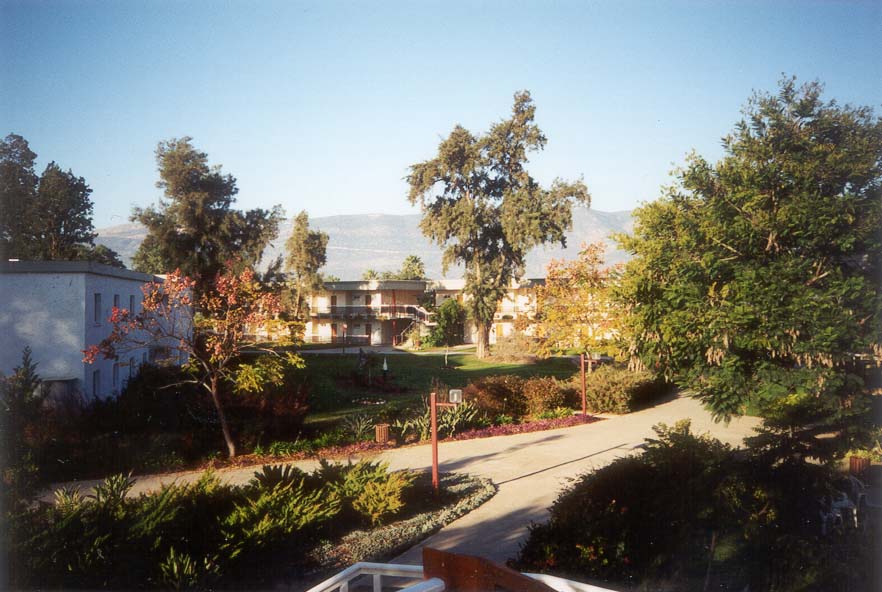
After Jerusalem we headed North and stayed in this kibbutz at Kfar Blum. It was quite a pretty place and much different from the other parts of Israel we had seen. |
|
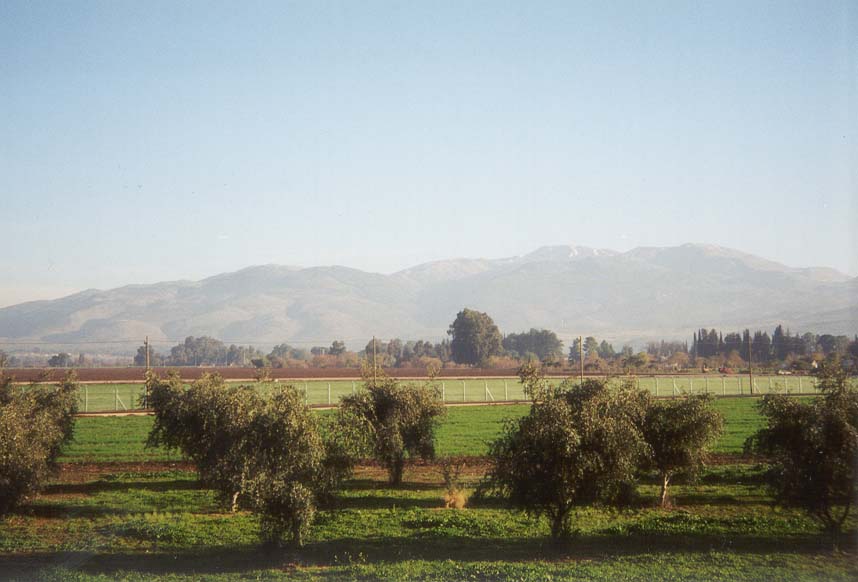
|
You can see that the North of Israel is much more lush than regions to the South; Masada is not even all the way South. Indeed, most of the water for the country comes from this region. |
|
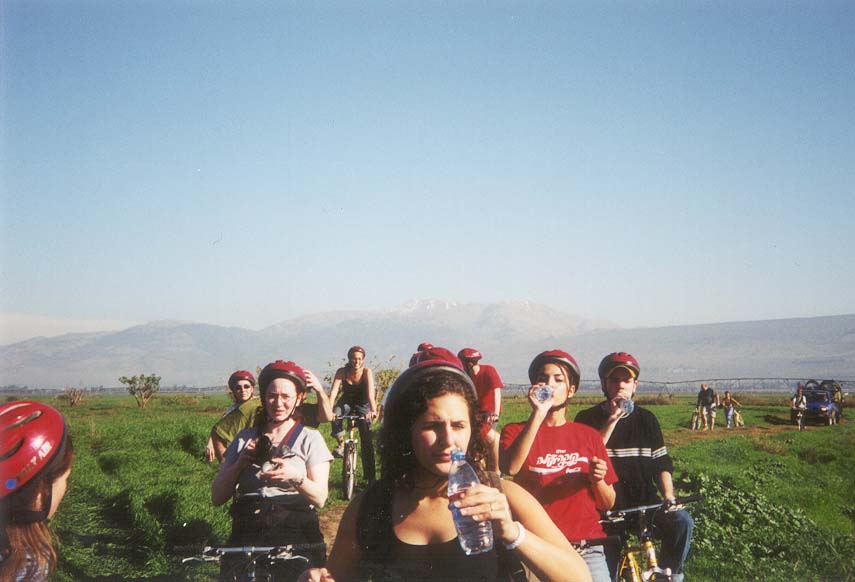
You can see the Golan Heights in the background. This area was beautiful and refrehsing, a flat land in the middle of a ring of mountains. We took a bike trip around similar terrain as this and passed by many natural beauties, including streams and small bodies of water. It was good to get some excercise and not just sit in the bus. It was a bit bizarre actually, they just drove us to an empty lot in the middle of nowhere and there were 40 new, shinging mountain bikes just waiting for us. |
|
|
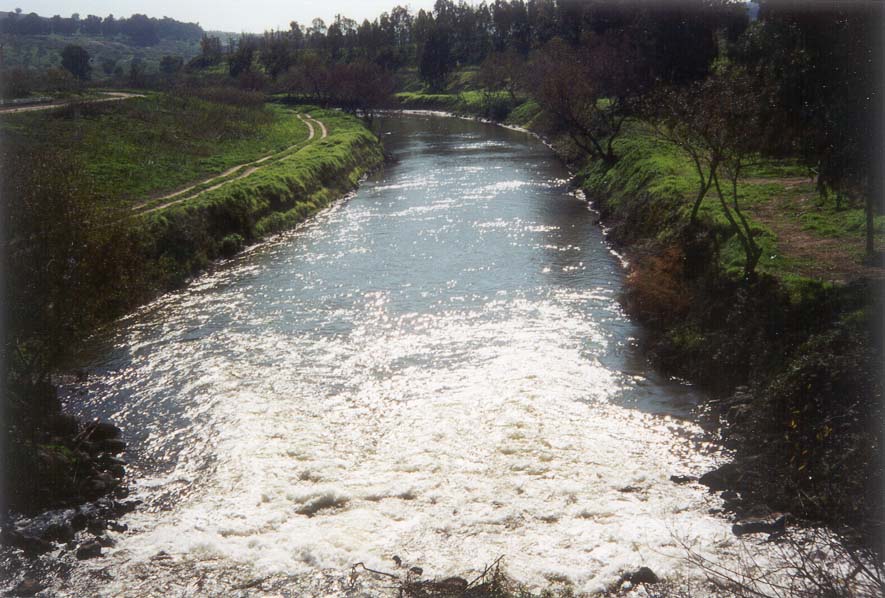
Somewhere later that day we stopped by a bridge that crossed the Jordan River where it is entirely in Israel and not making up the border between the two countries. |
|
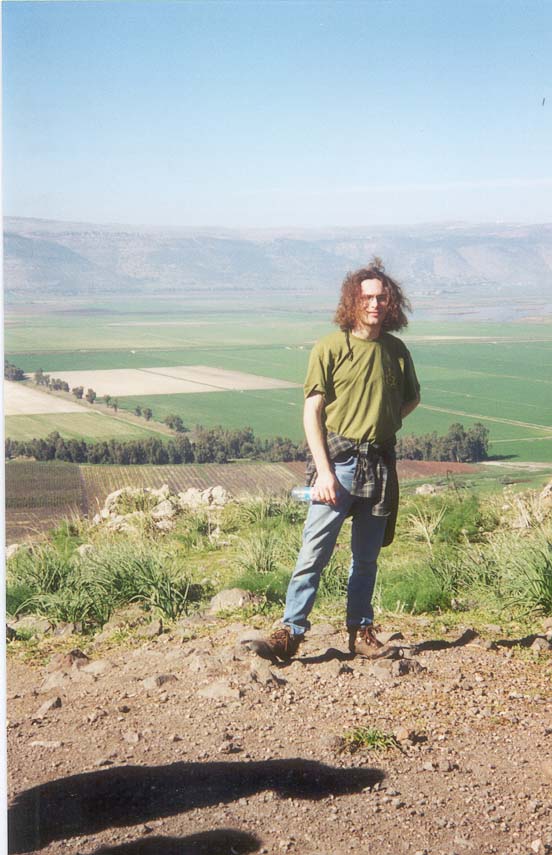
The Golan Heights. They drove us up the Heights in jeeps after the bike ride; it was bumpy but much fun. There were many other nice views like this. The Golan Heights were taken from Syria, I believe in the war of 1967 (but I'm not sure), because the Syrians were lauching rockets and bombs down at the Israeli farmers below. They have not been given back for the same reasons they were taken. |
|
|
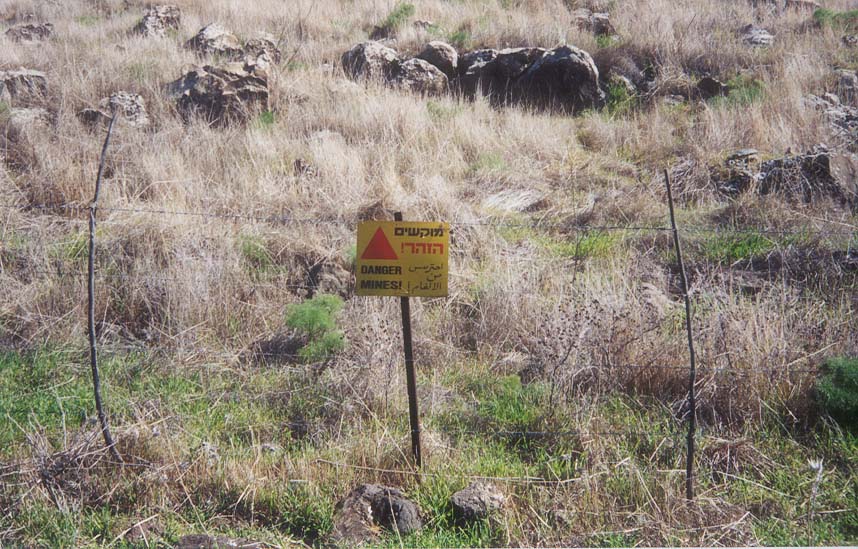
All along the jeep ride we spotted fields surrounded with barbed wire posting signs that warned of land minds. Since it was such a heavily contested area, many mine fields were layed. Because of the mines the majority of these fields have been forsaken. Cows are allowed to graze in the fields that are "unlikely" to contain land mines. |
|
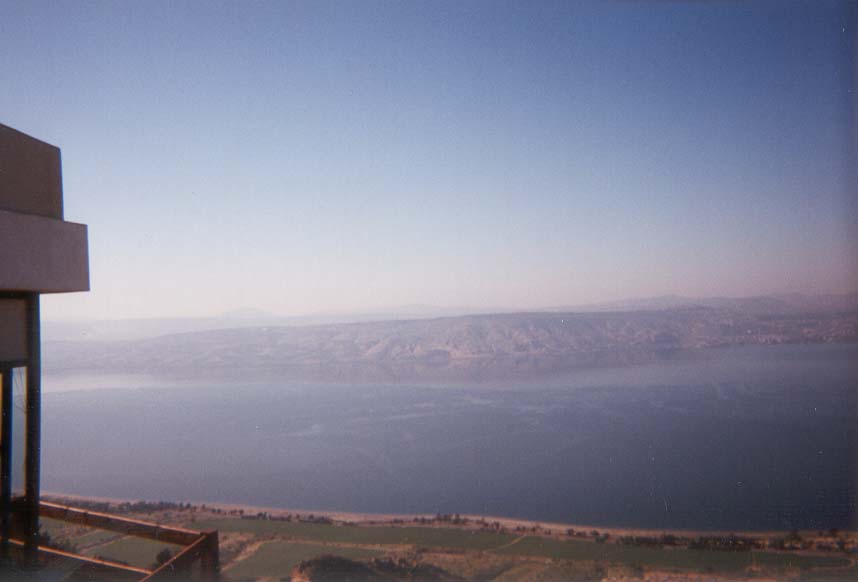
The Sea of Galilee / Lake Kinneret from a kibbutz we stayed at to eat lunch. Alot of the food on the trip was Russian style, accoridng to some of the Russians with us on the trip. I had pickeled carrots for the fist time. |
|
|
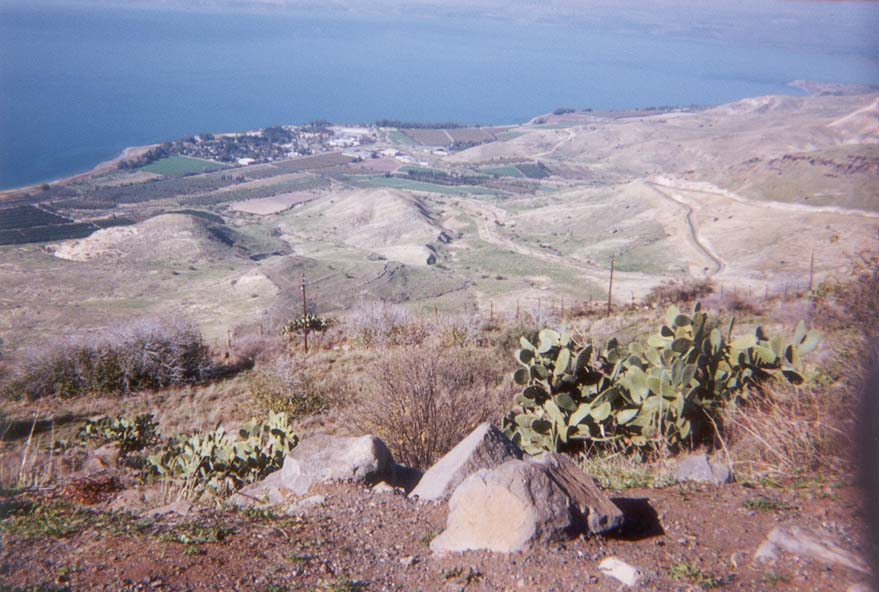
Another view of Lake Kinneret from the kibbutz. As you can see we were pretty high up in the Golan Heights, and the land sloped down fairly sharply from there. |
|
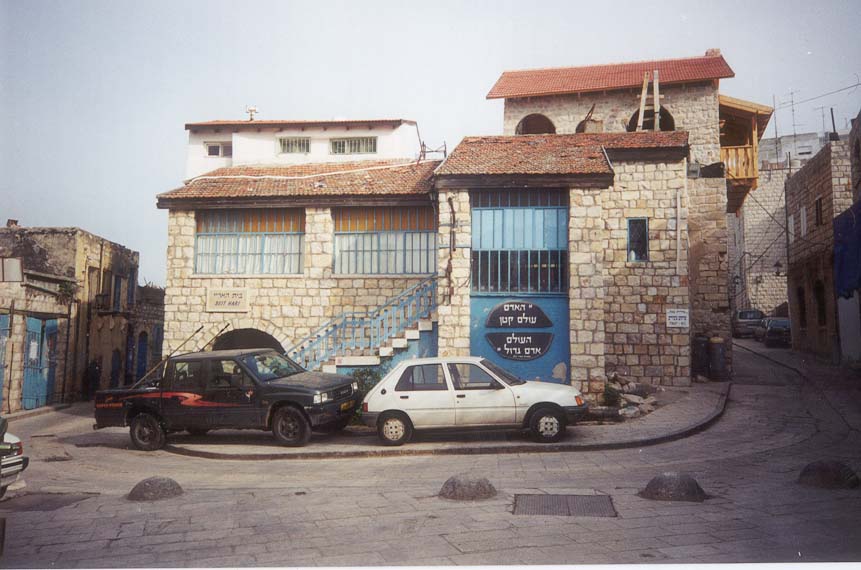
A road in the town of Tzfat. It was one of the last places we went and is one of three most sacred cities in Israel. |
|
|
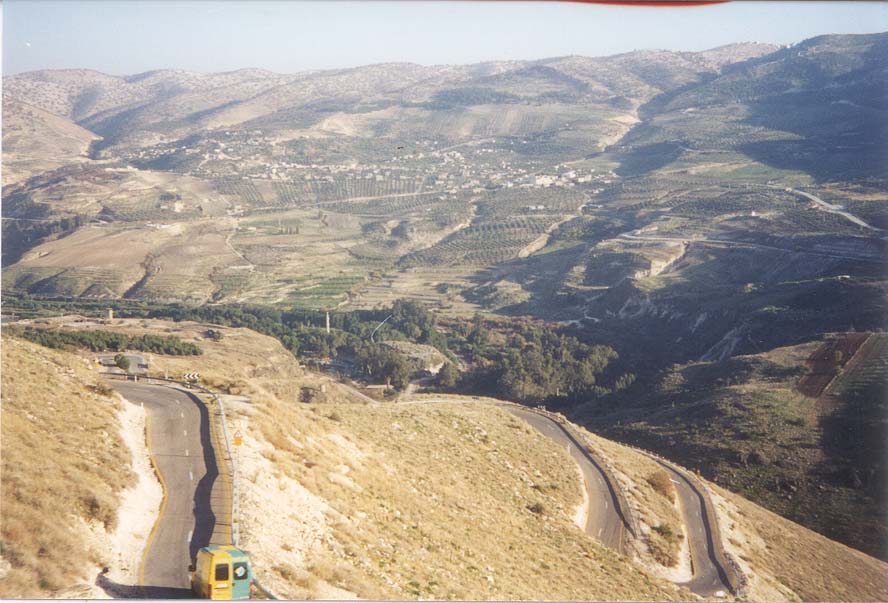
Three sections of the same road as we headed down from the Golan Heights. |
|
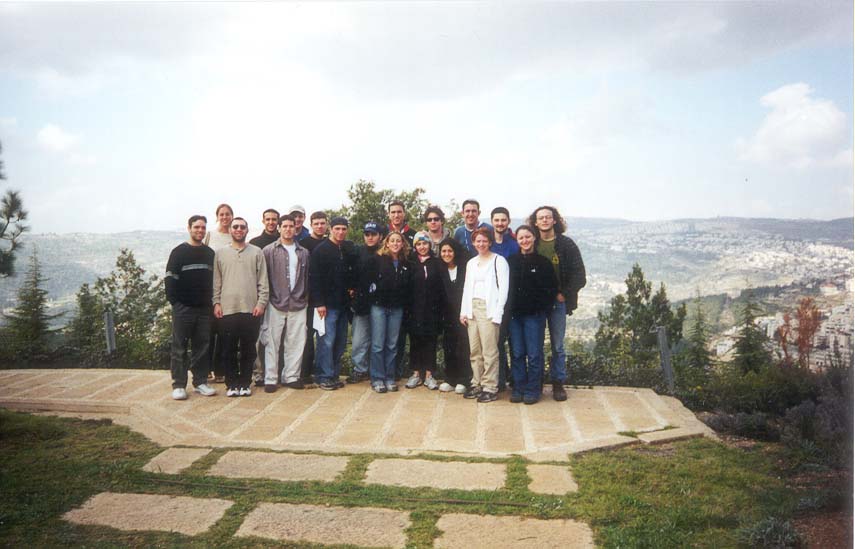
Cornell Bus #170 Group. The Cornell contingent was actually divided into two groups because of size. The other bus was only composed of Cornellians, but we split ours with the UNLVers (University of Nevada at Las Vegas); they were a fun and lively bunch. |
|
|
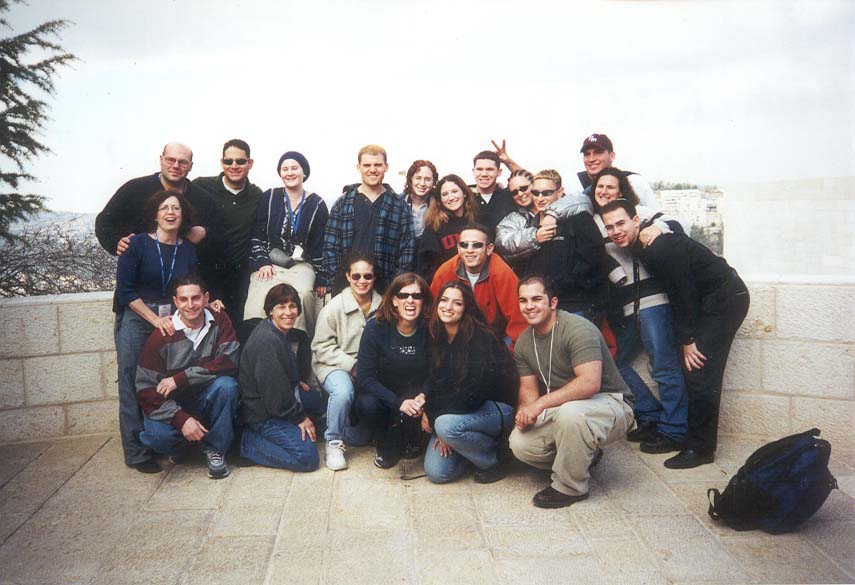
UNLV's group, who shared Bus #170 with us. |